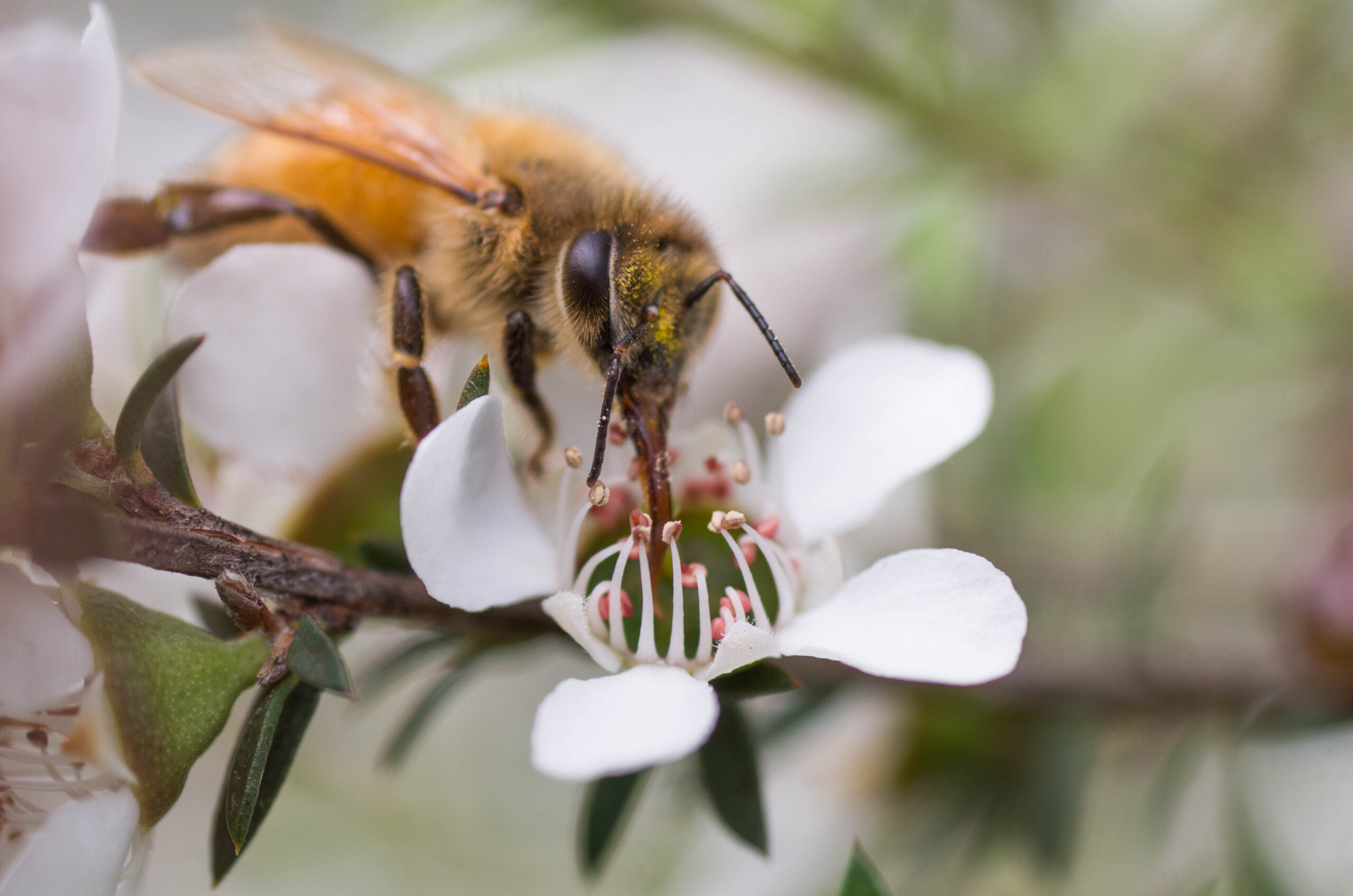
Bruce Lowe checks the weather forecast for the fifth time this morning. Rain is coming, maybe tomorrow, maybe the day after. His Manuka trees are in full bloom right now, covered in delicate white flowers that look like tiny stars.
If the rain hits hard, those flowers will drop. The nectar will wash away. And his entire year’s income could disappear in 48 hours.
“People think beekeeping is this peaceful, meditative job,” Lowe says, loading empty frames onto her truck at 5 a.m. “They don’t see this part. The panic. The racing against weather and time.”
Welcome to the Manuka honey season, where beekeepers have roughly three to six weeks to capture an entire year’s worth of work. Miss the window, and there’s no second chance.
The Bloom That Won’t Wait
Manuka trees don’t bloom on a convenient schedule. They flower when they feel like it, usually sometime between November and January in the North Island, later in the South Island. The exact timing depends on temperature, rainfall, and factors scientists still don’t fully understand.
Some years, Manuka in the Coromandel blooms in early December. Other years, it waits until mid-January. The trees don’t send out a memo.
“I’ve been doing this for 35 years,” Lowe says. “I still can’t predict it perfectly. You watch the buds, check the long-range forecasts, and hope you get it right.”
Once the flowers open, the clock starts ticking. Most Manuka blooms last three to four weeks. In hot, dry weather, they might stretch to five weeks. Heavy rain or strong winds can cut the season to two weeks or less.
During that narrow window, beekeepers need to move hives, check them constantly, harvest frames of honey, replace empty frames, and do it all again. Some days, Lowe works 16 hours straight.
“You sleep when it’s over,” he says. “During the bloom, you work.”
Location is Everything
Not all Manuka honey is created equal, and location explains why.
Lowe runs 800 hives scattered across the Coromandel Peninsula. Some sit in dense Manuka bush, surrounded by nothing but native forest for kilometers. Others perch near farmland, where bees can reach Manuka but also clover, pasture flowers, and whatever else is blooming.
The hives in pure Manuka country produce honey with MGO levels above 500. The hives near farmland produce honey around MGO 150. Same bees, same time of year, but wildly different results.
“Bees don’t care what you want them to visit,” Lowe explains. “They go wherever the best nectar is. If there’s clover blooming nearby, they’ll visit that too.”
This is why beekeepers haul hives into remote locations that seem almost deliberately inconvenient. Lowe has hives on hilltops that require an hour’s hike. Other beekeepers use helicopters to reach their most isolated sites.
“The best Manuka grows in places that make you curse while you’re carrying gear uphill,” says Dave Mitchell, who keeps bees in Northland. “But that’s also where you get the pure stuff, the high-MGO honey that actually makes money.”
The Weather Gamble
Three days before Christmas, Lowe’s weather app shows a forecast that makes his stomach drop. A low-pressure system is moving in. Rain, possibly heavy. Maybe three days of it.
His Manuka has been blooming for two weeks. The bees have been working overtime, the hives are heavy with honey. But he was hoping for another week of good weather to really fill the frames.
He makes a call. Start harvesting now, even though the honey isn’t quite ready.
“You always want one more week,” he says, pulling frames from a hive that evening. “But sometimes nature says no.”
The frames he pulls are about 70 percent full. In a perfect world, he’d wait until they’re 90 percent capped with wax, meaning the bees have finished evaporating the water and sealing the honey.
But the rain is coming. Wet weather means bees can’t fly. Flowers get pounded and drop their petals. The nectar flow stops. If Lowe waits for perfect conditions, he might lose everything.
He spends the next two days pulling frames with her crew, working until dark. They harvest 140 hives before the rain hits.
The storm lasts four days. When it clears, the Manuka flowers are gone.
“That’s the season,” Lowe says, looking at the bare branches. “Three weeks of flowers. That’s what I’ve got to live on for the next year.”
The Economics of Urgency
Lowe’s honey from this season will bring in decent revenue if the MGO levels test well. Sounds good until you run the numbers.
He paid a hefty sum to rent the land where her hives sit. Equipment, truck costs, and fuel added up to another major expense. He hired two workers for six weeks. Testing fees took another bite. Then there’s insurance, boxes, frames, and all the gear that wears out or breaks.
By the time he pays his costs, Lowe’s take-home is roughly a third of what he brought in. That’s for a full year’s work, not just the harvest season
“People see the honey prices in stores and think we’re getting rich,” he says. “They don’t see the months of preparation, the gamble on weather, the years when varroa mites wipe out half your hives.”
The short season concentrates all the risk into a few weeks. One bad storm at the wrong time can destroy a year’s income. Disease hits your hives right before the bloom? You’re done. Flowers open a week earlier than expected and you’re not ready? Someone else gets the honey.
Why Not Just Make the Season Longer?
You can’t. Manuka blooms when it blooms.
Some beekeepers try to extend their season by moving hives. Start in Northland where Manuka blooms early, then truck hives south to catch later blooms in Canterbury. But moving hives is expensive and stressful for the bees.
“We tried that,” Mitchell says. “Lost a third of our hives to stress and disease. The bees don’t like being trucked around the country.”
Others have experimented with greenhouse-grown Manuka, trying to control flowering times. So far, it hasn’t worked commercially. Manuka is picky. It likes poor soil, full sun, and natural conditions. Pamper it too much and it sulks.
The seasonal window isn’t a bug. It’s a feature of dealing with a wild native plant that refuses to be domesticated.
The Long Wait
By February, Lowe’s hives sit quiet in their remote locations. The Manuka bloom is over. The frames are empty again. The bees cluster inside their boxes, living on stored honey and waiting for spring.
Lowe spends the next months repairing equipment, treating hives for mites, and checking her bank balance. The honey he extracted in December won’t generate income until March or April, after it’s been tested, packed, and sold.
“Nine months of preparation and waiting for three weeks of actual honey production,” he says. “That’s the job.”
He’s already planning for next season. Watching weather patterns, talking to other beekeepers, trying to predict when the Manuka will bloom.
Because in about 10 months, he’ll do it all again. The frantic checks of weather forecasts, the early mornings, the race against rain and wind and time.
The Manuka trees will flower when they’re ready. The bees will work as fast as they can. And Lowe will have just a few weeks to capture what the rest of the year depends on.
That’s not a flaw in the system. That’s the system. Nature’s gold comes with nature’s rules, and the biggest rule is simple: you get one chance. Make it count.