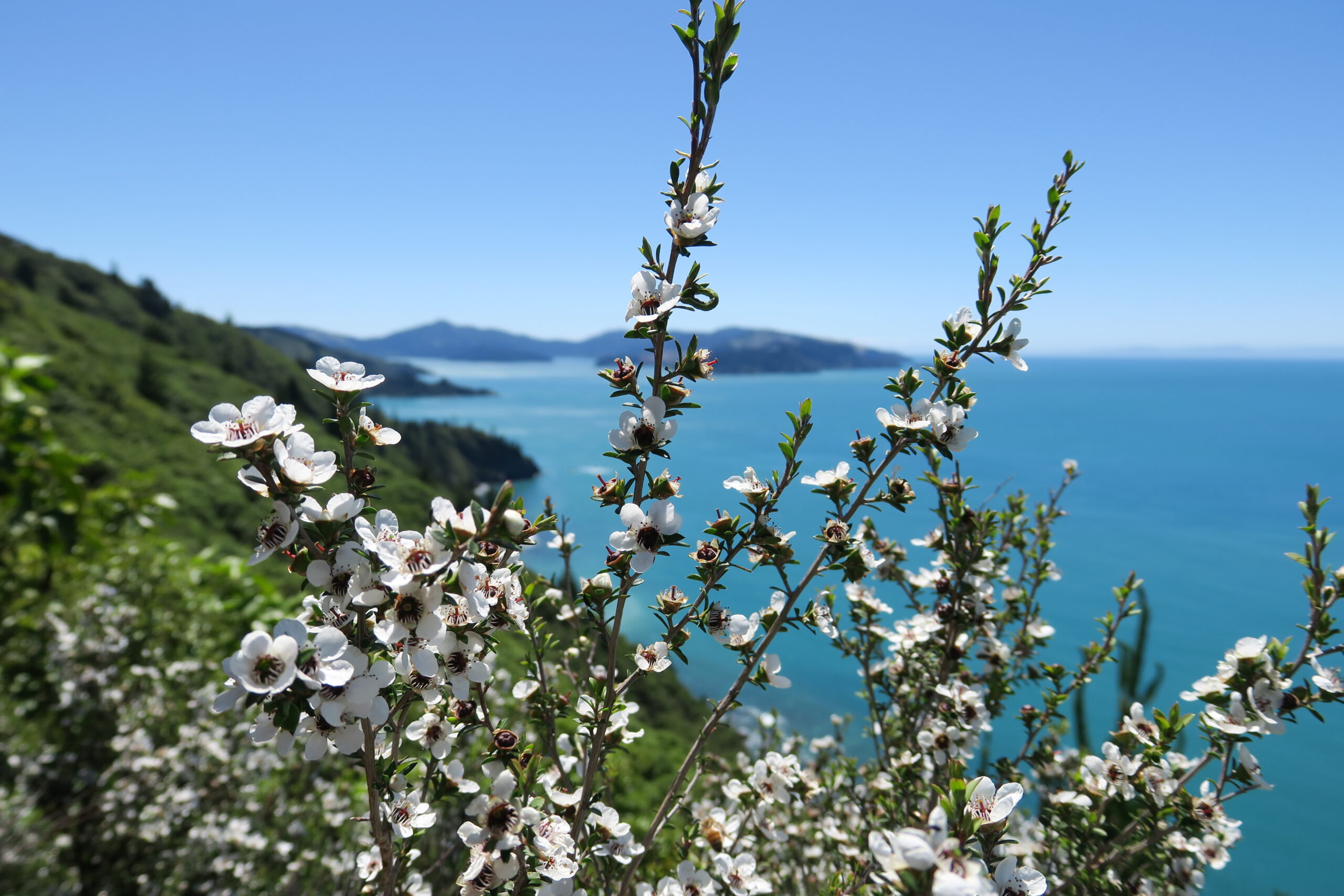
In 1980, a jar of Manuka honey sold for about the same price as any other honey. Maybe $3 at a local market, if you could find it at all. Most beekeepers considered it an inferior product, too strong-tasting for consumers who preferred mild clover honey.
Today, that same jar can sell for $200 in luxury shops from Tokyo to London. New Zealand exports over $300 million worth of Manuka honey annually. The global Manuka products market, including skincare and supplements, exceeds $1 billion.
How did a scrubby native bush that early settlers dismissed as worthless become New Zealand’s most valuable natural export? The answer involves curious scientists, savvy marketing, international fraud, and a plant that turned out to be far more special than anyone imagined.
The Science That Started Everything
The transformation began with Peter Molan, a biochemistry professor at the University of Waikato. In the early 1980s, Molan was studying the antibacterial properties of honey for wound care. All honey has some bacteria-fighting ability. But Molan noticed something odd about Manuka honey.
When he removed the usual antibacterial factors from honey, diluting it and neutralizing its acidity, most honey lost its effectiveness. Manuka honey kept working. Something else was providing the antibacterial punch.
Molan spent years trying to identify this “unique Manuka factor.” He published papers showing Manuka honey could kill bacteria that regular honey couldn’t touch. Medical researchers started paying attention. A few adventurous doctors began using Manuka honey for wound dressings.
“Molan gave Manuka scientific credibility,” says Dr. Sarah Bray, who worked in his laboratory. “Before him, it was just folk medicine. After his research, it became something doctors could actually prescribe.”
The breakthrough came in 2008 when German scientist Thomas Henle identified methylglyoxal, or MGO, as the active compound. Now there was a specific chemical to measure, test, and quantify. Manuka honey wasn’t just “good for wounds.” It contained MGO at levels 100 times higher than regular honey.
That discovery opened the floodgates.
Early Export Markets
New Zealand honey producers had been exporting honey for decades, mostly to Australia and the Pacific. But nobody was paying premium prices. Honey was a commodity, sold by the ton to bulk buyers who blended it and repackaged it.
After Molan’s research gained attention, a few small producers started marketing Manuka honey specifically for its health properties. They targeted health food stores and alternative medicine markets. The honey sold for maybe double the price of regular honey.
The real explosion came when Asian markets discovered Manuka. Japan was first, in the late 1990s. Wealthy Japanese consumers, already interested in natural health products, embraced Manuka honey enthusiastically. They didn’t mind the strong taste. They wanted the health benefits.
“The Japanese market taught us that some consumers would pay almost anything for genuine high-grade Manuka,” says export manager Helen Carter. “That changed how we thought about the product.”
South Korea followed. Then Hong Kong. By the mid-2000s, Asian buyers were paying prices New Zealand producers had never imagined possible. A jar of high-grade Manuka that cost $30 in New Zealand sold for $150 in Seoul.
The Marketing Machine
As prices rose, marketing evolved from simple health claims to luxury branding. Manuka honey became positioned alongside premium wines, artisanal chocolates, and other high-end food products.
Producers emphasized the New Zealand story. Remote locations. Pure wilderness. Pristine environment. The honey wasn’t just medicine. It was a product of New Zealand’s unique ecology, something no other country could replicate.
The geographic specificity mattered. Champagne comes from Champagne. Manuka honey comes from New Zealand. This narrative justified premium pricing and helped distinguish genuine products from fakes.
Some producers took branding even further, creating luxury packaging and partnering with high-end retailers. Manuka honey appeared in duty-free shops, premium grocery chains, and specialty stores in wealthy neighborhoods.
“We’re not selling honey,” one marketing executive told industry colleagues. “We’re selling New Zealand in a jar.”
The strategy worked spectacularly well in markets where consumers had disposable income and trusted New Zealand’s clean, green image.
The Middle East and Europe
By 2010, Manuka honey was reaching Middle Eastern markets. Wealthy consumers in Dubai, Abu Dhabi, and Saudi Arabia embraced the product. Some buyers purchased it as gifts, others for personal use. The cultural acceptance of honey as medicine in Islamic tradition helped its adoption.
Europe took longer to catch on. European consumers were skeptical of health claims and suspicious of premium pricing. Strict regulations around food labeling meant producers had to be careful about medical claims.
But gradually, European markets opened up. The United Kingdom led the way, with natural food stores and pharmacies stocking Manuka honey. Germany followed. Soon, Manuka was available across Western Europe.
The European Union’s recognition of Manuka honey as a protected geographical indication in recent years boosted exports further. The official recognition assured European consumers worried about fake products.
The Problem of Success
Massive demand created massive fraud. As Manuka prices soared, counterfeiters took notice. Fake Manuka honey flooded global markets.
Some fakes were crude: regular honey in jars with Manuka labels. Others were sophisticated: blends of cheap honey with added flavoring and coloring to mimic Manuka’s taste and appearance. The most brazen operations produced entirely synthetic products with no real honey at all.
By 2015, estimates suggested that fake Manuka outsold the genuine product by five to one globally. New Zealand was producing maybe 10,000 tons annually. Global markets were selling 50,000 tons of “Manuka honey.”
“The fraud problem nearly destroyed the industry,” Carter says. “Consumers were buying fake product, finding it didn’t work, and assuming all Manuka was a scam.”
New Zealand responded with strict testing requirements, traceability systems, and international legal action to protect the Manuka name. The fight continues, but the percentage of fake product in major markets is slowly declining.
Market Maturity
Today’s Manuka export market is more sophisticated than the early wild days. Major buyers require lab testing and full traceability. Regulatory frameworks in key markets make fraud harder. Consumers are better educated about checking for MGO ratings and batch codes.
China became New Zealand’s largest Manuka honey market, surpassing all others combined. Chinese consumers, particularly in wealthy urban areas, view Manuka honey as a premium health product worth the high price. E-commerce platforms make genuine New Zealand honey accessible across the country.
The United States represents another major market, though growth has been slower. American consumers tend to be more price-sensitive than Asian or Middle Eastern buyers. But health-conscious Americans willing to pay for quality have embraced Manuka honey for everything from wound care to digestive health.
Australia remains a complicated market. Australian producers make their own Manuka honey from the same plant species, creating competition and confusion. Trade disputes over the Manuka name continue.
The Billion-Dollar Ecosystem
Manuka honey exports now support an entire ecosystem of businesses. Testing laboratories, packaging companies, logistics providers, marketing firms, and export agencies all depend on the industry. About 2,000 registered beekeepers produce Manuka honey commercially.
The industry also created secondary markets. Manuka honey appears in skincare products, throat lozenges, wound dressings, dietary supplements, and even dog food. These derivative products expand the total market well beyond jars of honey.
Some economists estimate the total global Manuka economy, including all related products, exceeds $1 billion annually. Not bad for a scrubby bush that European settlers tried to eradicate.
Looking Forward
The export phenomenon shows no signs of slowing. New markets continue opening. India, with its massive population and growing middle class, represents untapped potential. South America, Africa, and Southeast Asia remain largely unexplored markets.
But growth faces constraints. New Zealand can only produce so much genuine Manuka honey. The plant grows where it grows. Hives can only be expanded so much before you run out of suitable Manuka forest.
“We’re probably near peak production,” says industry analyst Tom Wilson. “The next phase isn’t about growing volume. It’s about protecting quality, fighting fraud, and maintaining premium positioning.”
That scraggly native bush, the one nobody wanted in 1980, has become one of New Zealand’s most valuable exports. The transformation took scientific curiosity, smart marketing, and fortunate timing.
But mostly, it took a plant that turned out to produce something genuinely unique. The export phenomenon happened because Manuka honey actually works. Everything else just helped people discover what was there all along.