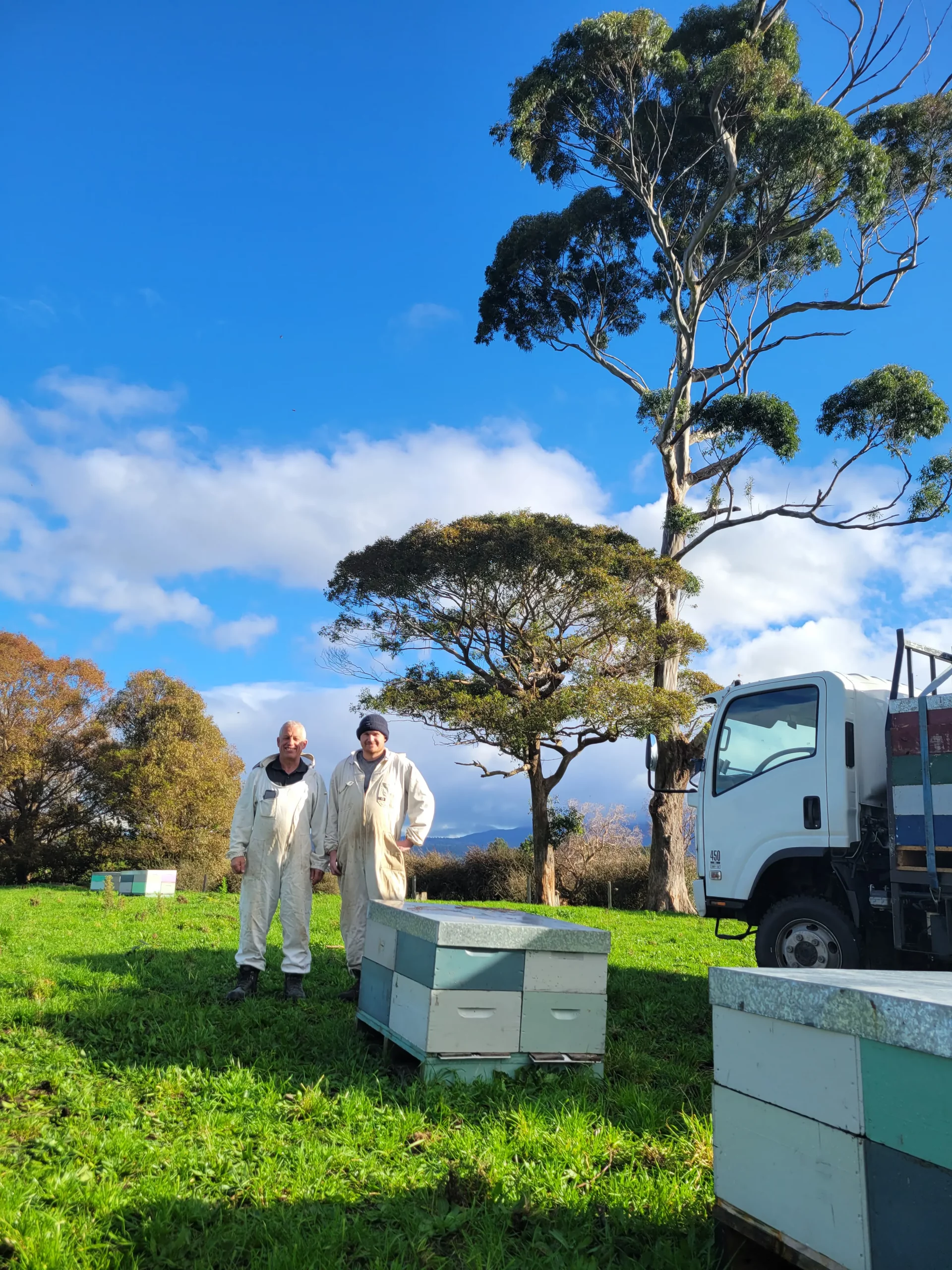
Bruce Lowe stands at the edge of a dirt road in the Kaimai Ranges, staring up at a hillside thick with Manuka scrub. The nearest house is 15 kilometers back. The nearest town is an hour’s drive on gravel roads that turn to mud when it rains.
“This,” he says, “is perfect.”
Perfect, in the world of Manuka beekeeping, means remote. It means rugged. It means places that make you question your life choices while hauling 40-kilogram boxes uphill in 30-degree heat.
Lowe and his team at New Zealand Bees travel thousands of kilometers each year searching for these perfect spots. They’re not looking for convenience or easy access. They’re hunting for isolation, for purity, for places where their bees will visit nothing but Manuka flowers.
The search pays off. The company produces some of the finest Manuka honey in New Zealand, with MGO levels that regularly test above 800. But getting there requires knowing where to look and why location matters more than almost anything else.
Why Distance Equals Quality
A bee can fly up to five kilometers from its hive in search of nectar. That’s a 10-kilometer circle of potential feeding territory. Everything blooming inside that circle becomes potential honey.
Put a hive near farmland, and your bees will visit clover in the pastures. Place it near a suburban garden, and they’ll raid the lavender and roses. Set it beside a native forest during Manuka season, far from any other flowering plants, and you get pure Manuka honey with sky-high MGO levels.
“People ask why we don’t just put hives in easier spots,” Lowe says. “The answer is simple. Easy spots have other flowers. Other flowers mean diluted honey. Diluted honey means lower MGO and lower prices.”
Many of New Zealand Bees’ hives sit deep in the Bay of Plenty wilderness, where Manuka thrives in poor soil and harsh conditions. These areas are too steep for farming, too remote for development, too rough for anything except scrub and native bush.
That makes them ideal for Manuka honey.
The Scouting Season
Lowe’s year starts in winter, months before the Manuka blooms. He and his team drive forestry roads, study topographic maps, and hike ridgelines looking for dense Manuka stands.
They’re checking several factors. First, is there enough Manuka? A small patch won’t support multiple hives. They need hectares of the stuff, preferably on north-facing slopes that catch maximum sun.
Second, what else is nearby? If the Manuka sits beside pine plantations that flower at the same time, that’s a problem. If there’s farmland within flying distance, that’s worse.
Third, can they actually reach it? A perfect Manuka forest is useless if you can’t get hives in and out. Some spots require helicopter lifts. Others need quad bikes or just human muscle and determination.
“We found an amazing site last year,” Lowe recalls. “Pure Manuka, acres of it, perfect isolation. But the only access was a four-wheel-drive track that washed out every time it rained. We had to pass.”
Negotiating Access
Finding the perfect spot is only half the battle. The land belongs to someone, and that someone needs to agree to host beehives.
Much of the Bay of Plenty wilderness is either Crown land, Maori trust land, or owned by forestry companies. Each requires different negotiations.
Crown land access goes through the Department of Conservation, which has specific rules about where hives can go and how many. Maori trust land involves discussions with iwi and hapu, sometimes requiring formal partnership agreements. Forestry companies worry about hives interfering with logging operations.
“We pay rent for the good sites,” Lowe says. “It’s worth it. A prime location can produce three times the honey of a mediocre spot, and the MGO levels are consistently higher.”
The rent varies wildly. Some landowners charge per hive. Others want a percentage of the honey. A few accept a flat annual fee. Lowe has one site where the landowner just wants a few jars of honey each year.
The Logistics Puzzle
Once they’ve secured a location, the real work begins. Lowe’s team needs to move hundreds of hives into remote areas before the Manuka blooms.
Each hive weighs about 40 kilograms when full. Moving 50 hives to a hilltop site means hauling two tons of equipment. Some sites are accessible by truck. Others require multiple trips with a utility vehicle. The most remote sites need helicopters, at thousands of dollars per flight.
“We’ve got one site that’s helicopter-only,” Lowe says. “Costs us a fortune to service. But the honey tests at MGO 1000-plus every year. You do the math.”
The hives can’t just be dropped anywhere. They need level ground, preferably with some wind protection. Too much shade and the bees stay cold. Too much sun and they overheat. Near a water source is ideal, though not essential.
Lowe’s team also thinks about access during harvest season. They’ll need to return in January or February to pull out frames heavy with honey. That means remembering which sites turn to bog in summer rain and which tracks get overgrown with ferns.
The Pollution Factor
Distance from civilization matters for another reason beyond flower variety. Air quality affects bees and honey.
Cities and industrial areas produce pollutants that bees can carry back to the hive. Agricultural chemicals drift on the wind. Even busy highways create dust and exhaust that settles on flowers.
“We test our honey for contaminants every year,” Lowe says. “The wilderness sites come back clean every time. It’s one of the reasons our honey qualifies for export to strict markets like the European Union.”
New Zealand’s relatively low population density helps. There are vast areas of native bush with nothing but birds and insects. These pockets of wilderness, particularly in the Bay of Plenty and East Cape regions, produce honey that tests clean for pesticides, herbicides, and heavy metals.
It’s not just marketing. Remote locations genuinely produce purer honey.
Reading the Landscape
After years of scouting, Lowe has learned to read the land. He can spot good Manuka country from a moving vehicle.
North-facing slopes get more sun, which means heavier flowering. Ridge tops catch wind, which can stress the trees but also keeps them compact and full of flowers. Gullies collect water, producing lusher growth but sometimes encouraging other plants to compete.
“You start to see patterns,” he says. “Certain soil types always have dense Manuka. Certain altitudes produce better nectar flows. There’s science to it, but also instinct.”
He keeps notes on every site. When the Manuka bloomed. How long it lasted. Weather conditions that year. Whether the bees produced well or struggled. Over time, these notes build into a map of knowledge that guides each year’s placement decisions.
The Payoff
All this effort, all these kilometers of driving and hiking and negotiating, comes down to a few weeks each summer when the Manuka blooms.
When Lowe’s team harvests honey from their remote Bay of Plenty sites, the results speak for themselves. The honey tests consistently high for MGO. The flavor is clean and intense. The purity meets the strictest international standards.
“We could put hives in easier places,” Lowe says, loading equipment for another scouting trip. “Lots of people do. But we’re after quality, not convenience.”
He checks his map, marking potential new sites for next season. The search never really ends. Good locations get logged over. Land changes hands. Access agreements expire.
Finding the perfect spot for a beehive is an art built on science, experience, and willingness to go where most people won’t. It’s measured in kilometers traveled and hills climbed.
And it shows in every jar.