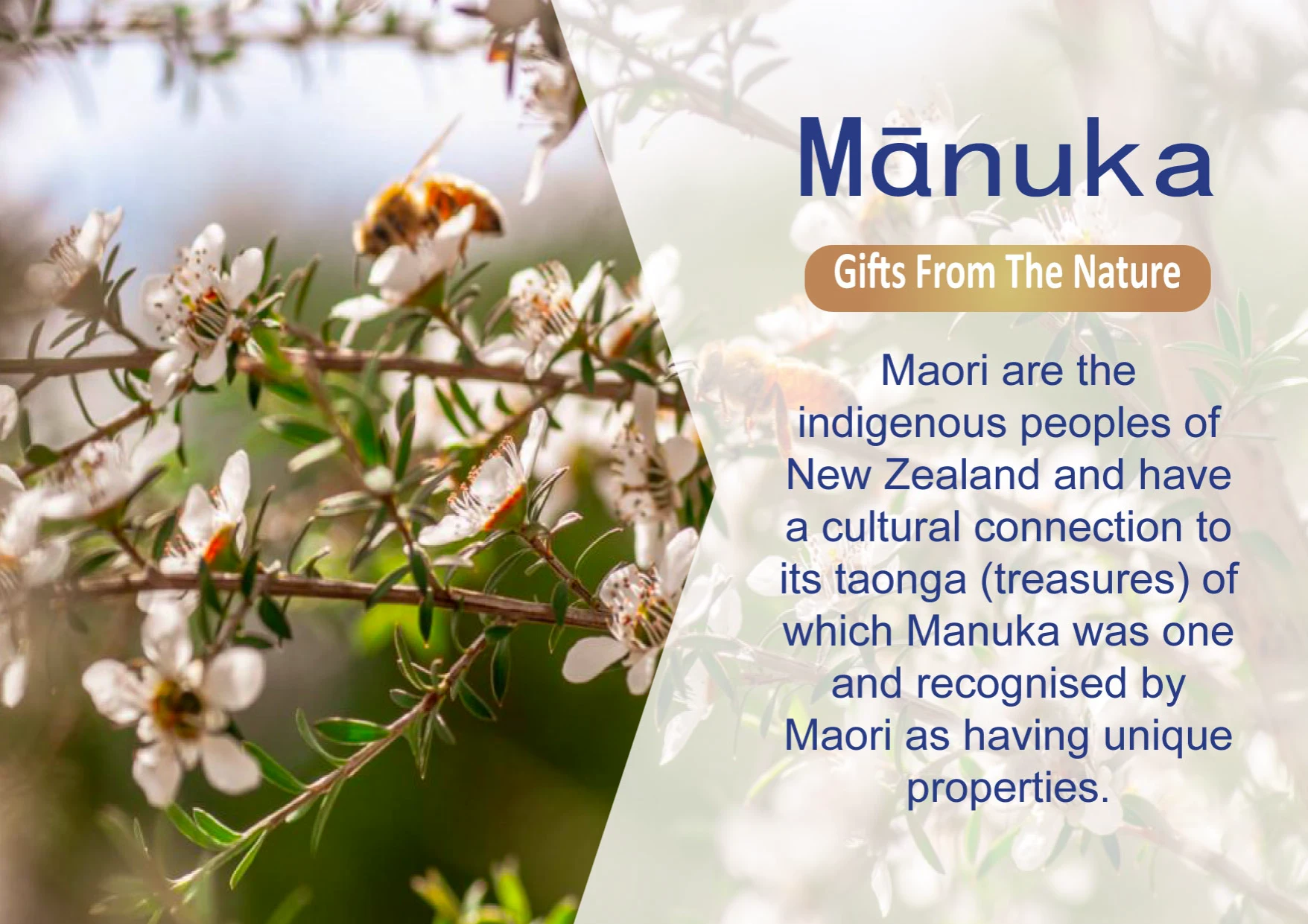
The shrub doesn’t look like much. Scraggly branches, small pointed leaves, and bark that peels in papery strips. It grows on hillsides too steep for farming, in soil too poor for most other plants. Early European settlers in New Zealand called Mānuka “scrub” and considered it a nuisance.
They had no idea they were looking at the source of the world’s most valuable honey.
Mānuka honey comes from bees that visit Leptospermum scoparium, the Mānuka bush. This particular species grows predominantly in New Zealand, with some populations in Australia. Related species exist around the world, from Southeast Asia to South America. But only Leptospermum scoparium produces the specific flowers and nectar that create genuine Mānuka honey.
The difference matters. A lot.
A Plant With a Maori Name
The word “Mānuka” comes from te reo Maori, the indigenous language of New Zealand. Maori used the plant for centuries before Europeans arrived, harvesting its bark, leaves, and wood for medicine and tools.
The name stuck, even as botanists gave the plant its Latin classification. Today, both names are used. Scientists call it Leptospermum scoparium. Everyone else calls it Mānuka.
That name has become valuable. Mānuka honey sells for premium prices worldwide. The label “Mānuka” on a jar can multiply its value tenfold compared to regular honey. This has sparked arguments over who gets to use the name.
Some parties argue that only certified New Zealand Mānuka honey should bear the name. Their reasoning: the word is Maori, the honey originates in New Zealand, and allowing anyone to use it dilutes the brand and confuses consumers.
Others counter that the plant grows in multiple countries, and producers anywhere should be able to call their product Mānuka if it comes from the right species.
The debate isn’t settled. It plays out in trademark offices, international trade negotiations, and courtrooms around the world.
Two Countries, One Plant
While the Mānuka plant grows in both New Zealand and Australia, the distribution is lopsided. New Zealand has vast areas of native Mānuka bush covering hillsides, coastal areas, and regenerating farmland. The plant thrives there.
Australia has Mānuka too, but far less of it. The same species grows in coastal parts of New South Wales and Victoria. But the Australian populations are smaller and more scattered.
“We’ve got maybe 5 percent of the Mānuka resource that New Zealand has,” admits Craig Wilson, an Australian beekeeper who produces honey from Leptospermum scoparium. “It’s the same plant, same flowers. We just don’t have as much of it.”
This creates a supply problem as global demand for Mānuka honey rises. New Zealand can expand production by putting more hives near existing Mānuka forests. Australian producers are working with limited resources, unable to scale up significantly.
The scarcity makes Australian Mānuka honey even more expensive than New Zealand’s, though whether it’s actually different in quality remains debated. Some tests show lower average MGO levels in Australian Mānuka. Others find no significant difference when comparing honey from the same species in both countries.
Geography and genetics may both play a role. Even within New Zealand, Mānuka from different regions produces honey with varying MGO levels. The plant adapts to local conditions, and those adaptations affect the nectar chemistry.
Other Leptospermum Species
The Leptospermum genus includes about 80 species scattered across the Pacific region. Australia has the most species diversity, with plants growing from Tasmania to Queensland. Some species also grow in Southeast Asia.
But having a Leptospermum plant doesn’t mean you can produce Mānuka honey. Most species don’t produce flowers that bees visit in large numbers. Others flower at times when bee colonies are weak. Some produce nectar, but it lacks the chemical compounds that make Mānuka special.
Only Leptospermum scoparium consistently produces the flowers bees need to make high-MGO honey. This species flowers heavily in summer, exactly when bee colonies are at peak strength. The flowers produce abundant nectar. And crucially, that nectar contains the chemical precursors that become methylglyoxal.
“We’ve tested honey from other Leptospermum species,” says researcher James Chen. “Some have trace amounts of MGO. Most have none. Only scoparium produces it in meaningful quantities.”
This biological specificity is why genuine Mānuka honey comes from such a narrow geographical area. The right plant grows in the right abundance in essentially two countries. Everywhere else is working with the wrong species.
The Quality Trademark
As Mānuka honey became globally popular, quality control became urgent. Too many products labeled “Mānuka” contained little or no actual Mānuka honey. Consumers couldn’t tell the difference by looking at a jar.
The Unique Mānuka Factor Honey Association, or UMF Association, emerged as a quality gatekeeper. This New Zealand organization bestows a trademark upon Mānuka honey that meets specific standards.
The UMF trademark requires independent laboratory testing for multiple markers. Honey must contain verified levels of MGO, DHA, leptosperin, and Mānuka pollen. It must come from tested and traceable sources. Producers pay licensing fees and submit to audits.
“The UMF mark tells consumers the honey has been independently verified,” says association representative Helen Carter. “It’s not just the producer claiming their honey is good. It’s third-party labs confirming it.”
The association works with growers and producers to maintain standards. Licensed brands have to uphold strict requirements to keep using the trademark. The association hires independent companies to check samples randomly. Products that fail testing lose their license.
This quality control costs money, which gets passed to consumers. But it provides assurance that UMF-rated honey is genuine.
The Trademark Battle
The UMF Association is also leading efforts to trademark the name “Mānuka” itself for New Zealand honey. The organization filed an application with the New Zealand government to protect the product as a geographical indication.
Geographical indications work like Champagne or Parmesan. Only sparkling wine from the Champagne region of France can be called Champagne. Only cheese from specific Italian provinces can be labeled Parmigiano-Reggiano. The UMF Association wants “Mānuka honey” to work the same way.
If successful, only honey produced in New Zealand from Leptospermum scoparium could be sold as Mānuka honey. Australian producers would need a different name. Fake products from other countries would be clearly illegal in any jurisdiction recognizing the trademark.
The application has sparked fierce debate. Australian beekeepers argue they’re using the same plant and shouldn’t be shut out. Some international trade groups worry about setting precedents for trademarking indigenous names. New Zealand producers counter that protecting the name protects consumers from fraud.
Several countries have already recognized New Zealand’s claim. The European Union treats Mānuka honey as a protected geographical indication. China requires verification for imports labeled as Mānuka. But many markets remain unregulated, and fake products continue to flood stores.
Why the Source Matters
All of this legal and scientific complexity circles back to a simple fact: the plant matters.
Real Mānuka honey only comes from bees visiting Leptospermum scoparium flowers. The species grows predominantly in New Zealand, with smaller populations in Australia. Other Leptospermum species don’t produce the same honey.
When you buy Mānuka honey, you’re not just buying a generic product. You’re buying honey from a specific plant growing in specific locations. The geographical source isn’t just marketing. It’s chemistry and biology.
“People sometimes ask why we can’t just plant Mānuka everywhere and make more honey,” says beekeeper Bruce Lowe. “The answer is the plant is picky. It likes New Zealand conditions. It grows where it wants to grow.”
Those scraggly bushes on remote hillsides, the ones early settlers dismissed as worthless scrub, turned out to be producing something unique. Not because of clever science or human intervention. Just because that particular plant, in that particular place, makes nectar unlike anything else.
The source of our honey is a native New Zealand bush with a Maori name, growing wild in wilderness areas most people never see. That’s not poetry. That’s just where Mānuka comes from.