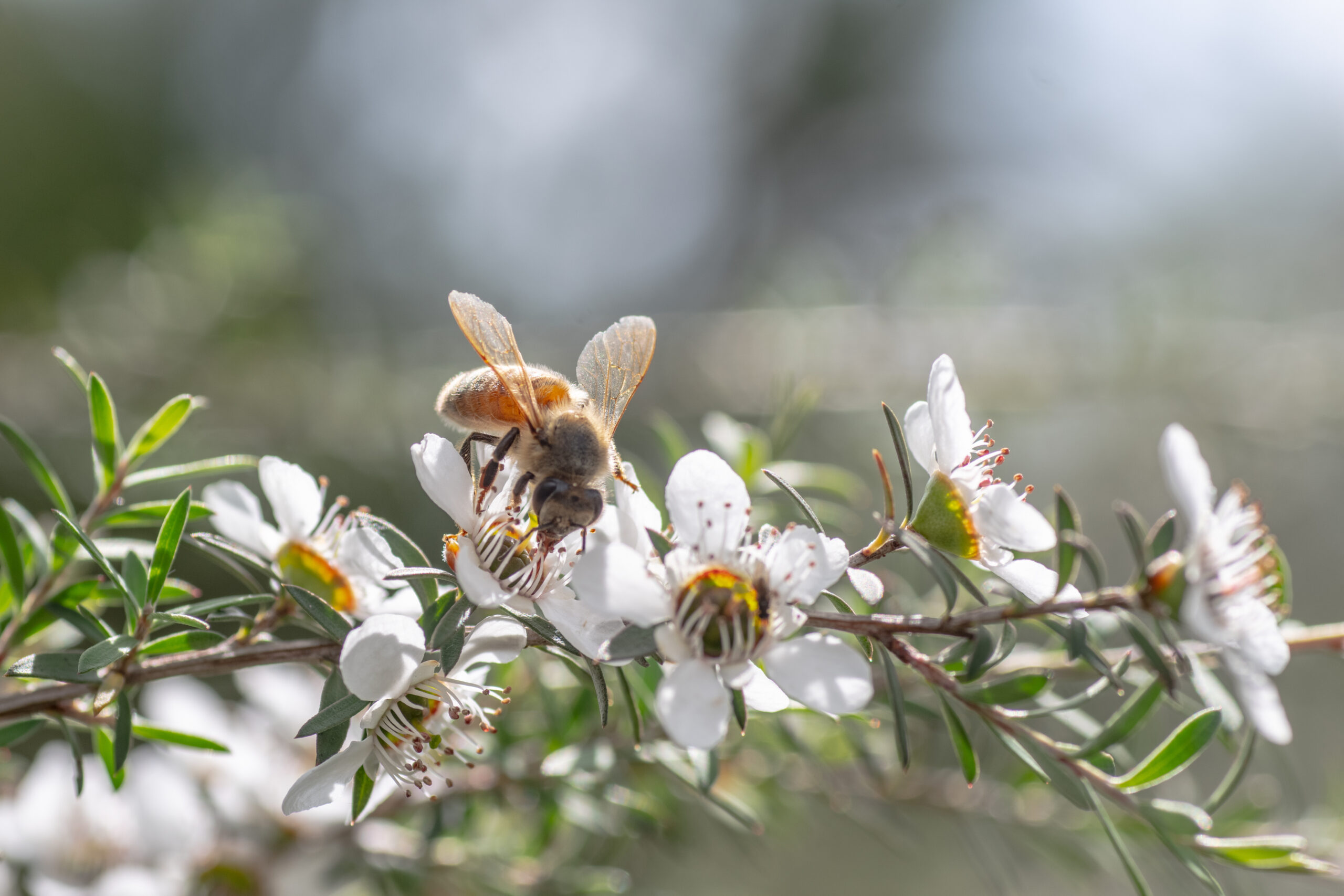
Lisa Morrison spent $95 on a jar of Manuka honey after her yoga instructor swore it cured her cold in two days. The label promised “raw, organic, pure Manuka honey” with healing powers that sounded almost magical.
Three weeks later, Morrison’s sore throat was no better. She looked more carefully at the jar. No MGO rating. No UMF number. Just vague claims and a picture of bees.
“I felt like an idiot,” she says. “I’d bought into the hype without checking the facts.”
She’s far from alone. Manuka honey has become a global sensation, surrounded by wild claims, dubious marketing, and outright lies. Some of it’s true. Much of it isn’t. Here’s what you need to know to separate the real deal from expensive nonsense.
Myth #1: All Manuka Honey Has Super Healing Powers
Walk into any health food store and you’ll find jars of Manuka honey promising to heal wounds, boost immunity, fight infections, and possibly solve world hunger.
The reality is more complicated.
Not all Manuka honey is created equal. A jar with MGO 30+ has roughly the same antibacterial power as regular honey. It’s fine for your morning toast, but it won’t work miracles.
“People think the word ‘Manuka’ automatically means medical-grade honey,” says Dr. Dee Carter, a microbiologist at the University of Sydney. “That’s like saying all wine is vintage champagne. There’s massive variation in quality.”
The therapeutic benefits kick in around MGO 250+. That’s when the methylglyoxal levels get high enough to fight bacteria in ways regular honey can’t. Hospital-grade Manuka, the stuff actually used in wound care, typically rates MGO 800+ or higher.
So yes, high-grade Manuka honey has real medicinal properties backed by solid research. But the cheap jar with no rating? That’s mostly just expensive sugar.
Myth #2: Manuka Honey is Always Raw and Unprocessed
The term “raw honey” gets thrown around like confetti, especially on Manuka labels. It sounds wholesome and natural. Problem is, it doesn’t mean much.
All commercial honey gets filtered to remove chunks of wax and dead bees. That’s not optional unless you enjoy crunchy honey. Most honey also gets gently warmed to keep it flowing through pumps and pipes.
“We never heat our honey above 37 degrees Celsius,” says Tom Wilson, who runs a honey packing plant in Tauranga. “That’s body temperature. Any hotter and you start breaking down the MGO.”
Some producers use higher heat to make processing faster and cheaper. This destroys some of the beneficial compounds. But it’s still technically Manuka honey if it came from Manuka flowers.
The word “raw” isn’t legally defined for honey in most countries. It’s marketing language. What matters is whether the honey has been tested and rated for MGO content. If the good stuff is still there, the processing method is less important than people think.
Myth #3: Organic Manuka Honey is Better
Here’s a secret the honey industry doesn’t advertise: truly organic honey is nearly impossible to produce.
Bees fly up to five kilometers from their hive. You can’t control where they go or what they visit. To meet organic certification, every flower within flying range needs to be pesticide-free. In New Zealand, that means vast tracts of wilderness with no farms, roads, or human activity nearby.
“We have maybe a dozen producers who can legitimately claim organic certification,” Wilson says. “The rest are using the word loosely or lying outright.”
Even certified organic Manuka isn’t necessarily better. Organic certification says nothing about MGO levels. You can have organic honey with MGO 50+ that’s functionally useless for health purposes, or conventional honey with MGO 850+ that works like medicine.
The certification matters if you want to avoid pesticides. It doesn’t automatically mean higher quality or better healing properties.
Myth #4: You Can Buy Real Manuka Honey from Australia
This one causes fights at dinner parties across the Tasman Sea.
Australia does have Manuka trees. The same species grows in parts of Victoria and New South Wales. Australian beekeepers do produce honey from these trees.
But here’s where it gets messy. New Zealand has trademarked the term “Manuka honey” in some markets and is fighting legal battles to protect it in others. The argument centers on whether Manuka is a protected geographical indication, like Champagne or Parmesan.
“Australian Manuka often has lower MGO levels because our Manuka trees are a slightly different variety,” admits Craig Wilson, an Australian beekeeper. “It’s still good honey. Just not the same as what comes out of New Zealand’s high-country Manuka forests.”
Most of the high-MGO Manuka honey on world markets does come from New Zealand. That’s not patriotism. It’s geography and plant genetics.
If you’re buying Australian honey labeled as Manuka, check for MGO testing from an independent lab. The honey might be genuine, but it should prove itself with numbers, not just names.
Myth #5: Dark Manuka Honey is Stronger Than Light
This myth sounds logical. Dark honey looks more potent, more serious, more medicinal.
It’s nonsense.
Manuka honey color ranges from pale gold to deep amber. The color depends on how long the bees left the honey in the hive, what trace minerals are in the nectar, and even what the weather was like during flowering.
“We’ve tested pale honey with MGO over 1,000 and dark honey with MGO under 100,” says lab technician Jane Foster. “Color tells you nothing about potency.”
The only way to know what you’re getting is to check the MGO or UMF rating on the label. Everything else is guesswork.
Myth #6: Manuka Honey Never Goes Bad
Honey is famous for lasting forever. Archaeologists have found 3,000-year-old honey in Egyptian tombs that’s still edible.
But Manuka honey has a complication. The MGO levels change over time.
Fresh Manuka honey contains high levels of DHA, which slowly converts to MGO as the honey ages. This means MGO levels can actually increase for the first year or two. After that, the MGO gradually breaks down.
“We recommend using Manuka honey within three years,” Wilson says. “It won’t make you sick after that, but the therapeutic properties fade.”
That jar at the back of your cupboard from 2019? It’s probably fine for eating. Just don’t count on it to heal your next cut.
Myth #7: More Expensive Always Means Better
Price and quality should go hand in hand. In the Manuka market, they often don’t.
A jar priced at $200 might contain genuine medical-grade honey worth every penny. Or it might be mid-grade honey in fancy packaging, priced to catch tourists who equate cost with quality.
“We see this constantly in airport shops,” says customs officer Mike Stevens. “Honey that costs $40 at the supermarket gets packaged in a gift box and sold for $150 at the duty-free store.”
The only reliable measure is the MGO or UMF rating from a certified tester. A $60 jar of MGO 550+ is better value than a $120 jar of MGO 400+ in a prettier box.
The Bottom Line
Back to Lisa Morrison and her expensive disappointment. She’s learned to read labels now.
“I look for the MGO number first,” she says. “Then I check for a batch code I can trace. If those aren’t there, I don’t care how pretty the label is or how many health claims it makes.”
That’s the smart approach. Manuka honey can do remarkable things, but only if you’re buying the real stuff at the right strength for your needs.
The myths persist because people want to believe in miracle cures. The facts persist because good science doesn’t care about marketing hype.
Know the difference, and you’ll never waste $95 on bee-themed snake oil again.