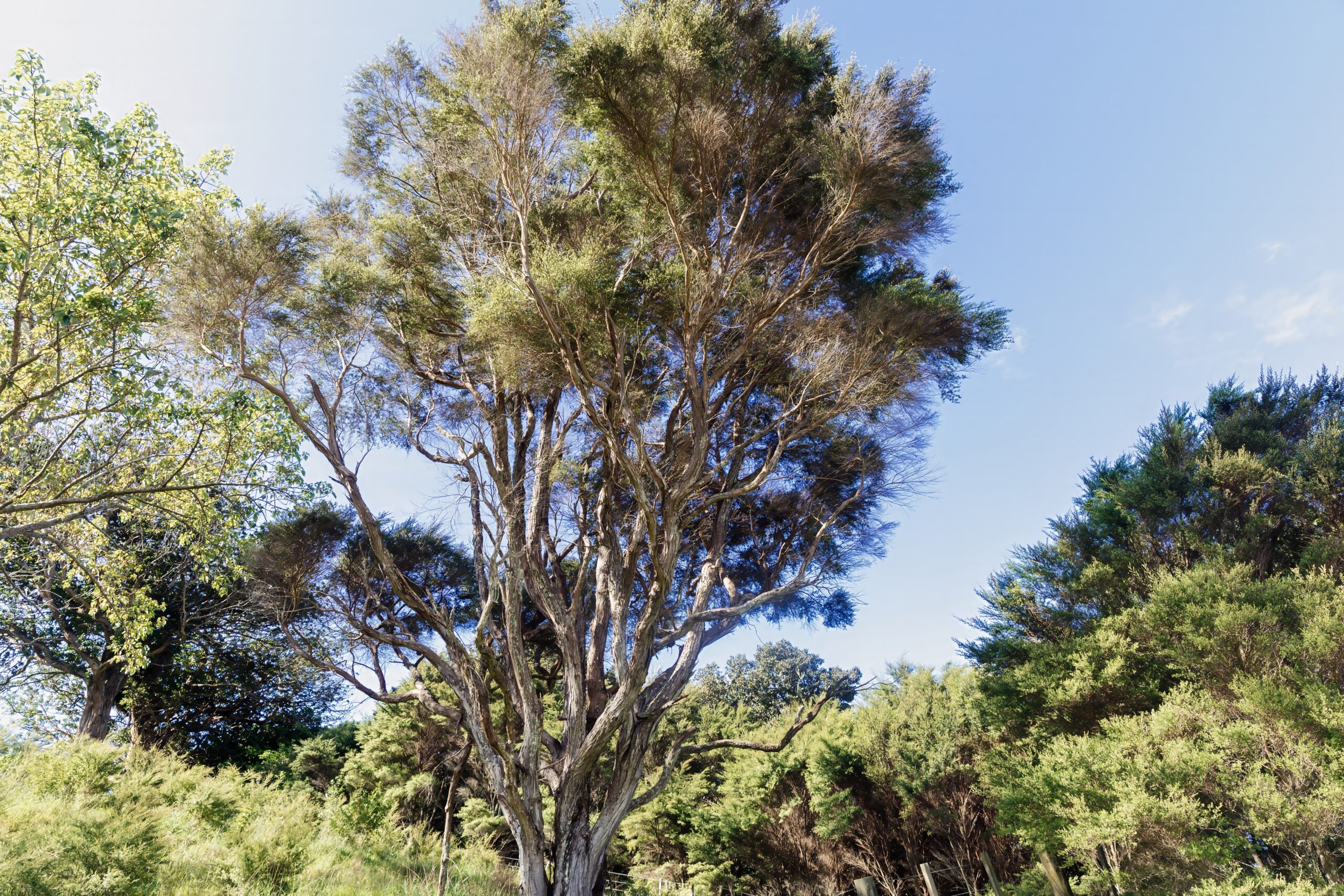
Bruce Lowe checks his calendar for the third time this morning. December 18th. His Manuka should be in full bloom by now. The white flowers should be covering the hillsides, and his bees should be working overtime.
Instead, the trees are barely budding. The flowers won’t open for at least another week, maybe two.
“This used to be predictable,” Lowe says, standing beside his hives in the Coromandel. “Manuka bloomed in early December like clockwork. Now? I have no idea what’s going to happen from one year to the next.”
He’s not imagining it. Climate change is disrupting the Manuka flowering season across New Zealand, and beekeepers are struggling to adapt. The shifts aren’t just inconvenient. They’re threatening the entire Manuka honey industry.
When Flowers Don’t Follow the Rules
Manuka flowering depends on temperature, rainfall, and day length. The plant typically blooms when conditions hit a sweet spot: warm enough to trigger flowering, but not so hot that the plant is stressed. Enough spring rain to build energy, but dry weather when the flowers actually open.
For decades, this meant Manuka bloomed in a relatively predictable window. North Island locations flowered between late November and early January. South Island sites bloomed from December through February. Beekeepers planned their entire year around these dates.
Climate change is scrambling the pattern. Warmer winters mean some Manuka trees bloom earlier than expected. Unusual cold snaps delay flowering by weeks. Drought stress can trigger early flowering, but the flowers produce less nectar. Heavy rain at the wrong time can wash out the bloom entirely.
“We had a season where Manuka in Northland bloomed three weeks early,” says Emma Richardson, who manages hives across the North Island. “We weren’t ready. The hives weren’t strong enough yet. We missed half the crop because the flowers came and went before our bees could work them.”
The following year, the same area bloomed two weeks late. Richardson had moved her hives into position early, anticipating the previous year’s pattern. The bees sat idle, eating their stored honey while waiting for flowers that took their time arriving.
The Temperature Problem
New Zealand’s average temperature has increased by about one degree Celsius over the past century. That doesn’t sound like much. But for plants operating on tight biological schedules, one degree changes everything.
Manuka flowering is triggered partly by accumulated heat over the growing season. The plant basically counts warm days until it reaches a threshold, then starts blooming. Warmer springs mean the threshold gets reached earlier.
But temperature doesn’t work in isolation. Manuka also responds to day length and rainfall. If warming shifts the temperature trigger but day length stays the same, the plant gets confused. Sometimes it blooms. Sometimes it hesitates, waiting for other cues to align.
“We’re seeing more variability, not just earlier or later blooming,” says plant ecologist Dr. Sarah Chen. “The same stand of Manuka might bloom at different times on north-facing versus south-facing slopes. Trees at high altitude respond differently than trees at sea level. The synchronization is breaking down.”
This variability creates nightmares for beekeepers. They need thousands of Manuka trees blooming at once to produce a meaningful honey crop. If the bloom stretches out over six weeks instead of concentrating into three, the nectar flow is too diluted. Bees gather honey, but not enough to make commercial harvesting worthwhile.
Drought and Deluge
Rainfall patterns are changing across New Zealand. Some regions are getting drier. Others are experiencing more intense rainfall events. Both extremes hurt Manuka flowering.
Drought stress before flowering can reduce the number of flower buds a Manuka tree produces. Less flowers mean less nectar, even if the bees work every bloom. Severe drought can prevent flowering entirely. The plant shifts into survival mode, conserving energy instead of reproducing.
Heavy rain during flowering is equally damaging. The downpours physically knock flowers off branches. They wash nectar out of open blooms. Wet weather keeps bees inside the hive, unable to forage even when flowers are available.
“We lost an entire season to rain in 2023,” Lowe recalls. “The Manuka bloomed on schedule. But it rained hard for two weeks straight during peak flowering. The bees couldn’t fly. By the time the weather cleared, most flowers had dropped.”
Climate models predict more extreme rainfall events for New Zealand. Longer dry periods punctuated by intense storms. This pattern is almost designed to disrupt Manuka flowering and honey production.
Geographic Shifts
Some beekeepers are noticing Manuka thriving in locations where it used to struggle. Higher altitudes that were once too cold now support healthy Manuka populations. Southern regions are seeing denser flowering as temperatures warm.
At the same time, some traditional Manuka strongholds are declining. Coastal areas experiencing more frequent droughts show stressed trees with reduced flowering. Lowland sites that used to bloom reliably are becoming unpredictable.
“The Manuka map of New Zealand is changing,” Chen says. “Areas that were marginal are becoming prime locations. Areas that were prime are becoming marginal. Beekeepers who’ve worked the same sites for 20 years are finding they need to move.”
Moving hives isn’t simple. Good Manuka sites require land access agreements, often negotiated years in advance. Roads or helicopter access for servicing hives. Water sources nearby. Distance from competing flowers. Finding new locations that check all these boxes takes time and money.
Older beekeepers who know their territories intimately are watching their accumulated knowledge become less useful. The patterns they learned over decades no longer apply.
The Varroa Connection
Climate change doesn’t affect Manuka in isolation. Warmer temperatures also benefit varroa mites, the parasites that devastate bee colonies.
Varroa mites reproduce faster in warm weather. Mild winters allow more mites to survive. This means bee colonies face heavier mite pressure exactly when they need to be strong for the Manuka season.
“We’re treating for varroa more often than we used to,” Richardson says. “The mites are breeding year-round now in some locations. That weakens the bees right when we need them working Manuka flowers.”
Weak colonies produce less honey. They’re also more vulnerable to other diseases and stresses. Climate change is creating a double hit: disrupting the flowering pattern while simultaneously making it harder to maintain healthy bee colonies.
Adaptation Strategies
Beekeepers are trying various strategies to cope with the changing conditions. Some are diversifying locations, spreading hives across wider areas to hedge against localized blooming failures. Others are focusing on higher-altitude sites that may become more reliable as temperatures warm.
Technology is helping. Lowe now uses temperature sensors and soil moisture monitors near his hive sites. He tracks weather patterns obsessively, looking for correlations that might predict flowering timing.
“I’m basically trying to build a new mental model of when Manuka blooms,” he says. “The old rules don’t work anymore. I need new ones.”
Some beekeepers are experimenting with movable hive systems, ready to truck bees to wherever Manuka happens to bloom in a given year. This increases costs but provides flexibility when flowering patterns become unpredictable.
Plant breeding offers potential long-term solutions. Researchers are studying Manuka varieties that might flower more consistently under variable conditions. But breeding trees, testing them, and getting new varieties into production takes decades.
What’s at Stake
New Zealand’s Manuka honey industry is worth hundreds of millions of dollars annually. Thousands of beekeepers depend on reliable Manuka flowering for their livelihoods. The country’s reputation for producing the world’s finest Manuka honey rests on consistent quality and supply.
Climate change threatens all of this. Not immediately, not catastrophically, but gradually through increasing unpredictability. A bad season here. A missed bloom there. Each disruption chips away at production and confidence.
“I’m not ready to give up,” Lowe says, watching his late-blooming Manuka finally start to open. “But I’d be lying if I said I wasn’t worried. The climate is changing faster than the bees or the trees can adapt.”
The flowers will bloom this year, probably. Next year too. But when, and how well, and whether beekeepers can be ready when they do, those questions get harder to answer every season.